
Freedom
From Spent Dolomitic Refractories to Magnesium Metal Production
Introduction
Magnesium is a strategic metal with wide industrial applications, from lightweight alloys in automotive and aerospace to beverage can production, desulfurisation of pig iron, and the reduction of metals such as titanium and zirconium.
Within the European Union, magnesium has been classified as a Critical Raw Material (CRM) due to its supply risk and strategic importance. Today, China accounts for nearly 90% of the world’s refined magnesium production, creating strong market dependency and exposure to geopolitical and environmental risks.
Additionally, the conventional production route for magnesium is energy-intensive and carbon-heavy, generating significant CO₂ emissions. The FREEDOM portfolio seeks to address both the supply vulnerability and the climate challenge by developing a low-carbon European magnesium value chain, integrating recycled and secondary sources to secure local and sustainable access to magnesium and magnesium oxide.
Objectives
The ambition of the FREEDOM portfolio is to develop a supply chain securing European access to magnesium (Mg) and magnesium oxide (MgO), while addressing current climate challenges through the development of a low-carbon process and the integration of secondary sources of magnesium, particularly dolomitic refractories from foundry and glass furnaces.
The specific objective of the FREEDOM-CRM project will be to develop an original metallurgical concept able to convert MgO into a pure Mg metal.
Project Overview
Production and reduction of MgO-based agglomerates
The FREEDOM-CRM project is built around the development of self-reducing MgO–C agglomerates, first produced at laboratory scale at CTP and then validated at pilot scale at CRM Group. These agglomerates will subsequently be reduced in a high-temperature electric pilot furnace at CTP, generating magnesium vapour, which will be recovered by condensation in a liquid collector metal such as tin, forming an intermediate alloy.
Technological Innovation
Unlike conventional carbothermic or electrolytic routes, this new concept combines:
-
Self-reducing carbon agglomerates, improving process control and reaction efficiency.
-
Electric-powered reduction furnaces, aligning with Europe’s electrification and decarbonisation strategy.
-
Metallic magnesium recovery by condensation and distillation, ensuring high product purity and process circularity.
This integrated approach positions FREEDOM as a breakthrough initiative in sustainable metallurgy and as a key enabler for the European Green Deal objectives.
Recovery of Pure Metallic Magnesium
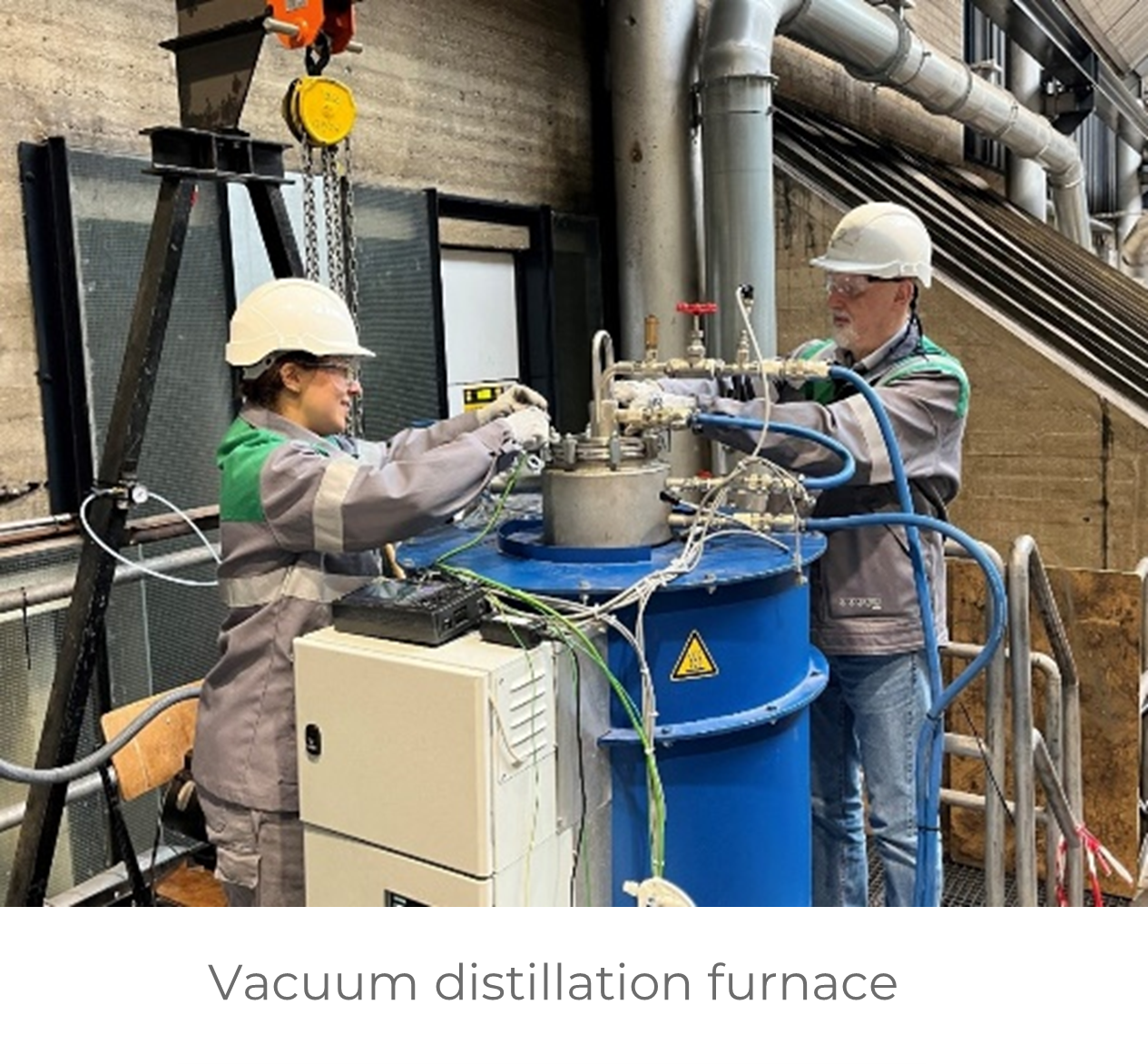
In the final step, pure metallic magnesium is extracted from the intermediate alloy through vacuum distillation, carried out at laboratory or pilot scale at CRM Group. This approach demonstrates a complete, low-carbon and scalable metallurgical route for magnesium production from secondary raw materials.
Conclusion
By transforming waste refractories into a strategic resource, FREEDOM-CRM contributes to Europe’s industrial resilience and climate neutrality goals. The project not only addresses the magnesium supply risk but also demonstrates the viability of circular, low-carbon metallurgy for critical raw materials.
Once operational, the FREEDOM-CRM process will support multiple sectors, aerospace, automotive, defence, and energy, by supplying locally produced, sustainable magnesium, reducing Europe’s dependency on imports and paving the way for a cleaner industrial future.
Partners
Funding Bodies
